Expanding Educational Access for Rural Communities
In many rural communities, access to education is not simply a matter of attending school. It is a matter of distance, infrastructure, opportunity, and whether children are given the chance to continue learning beyond the most basic levels of education.
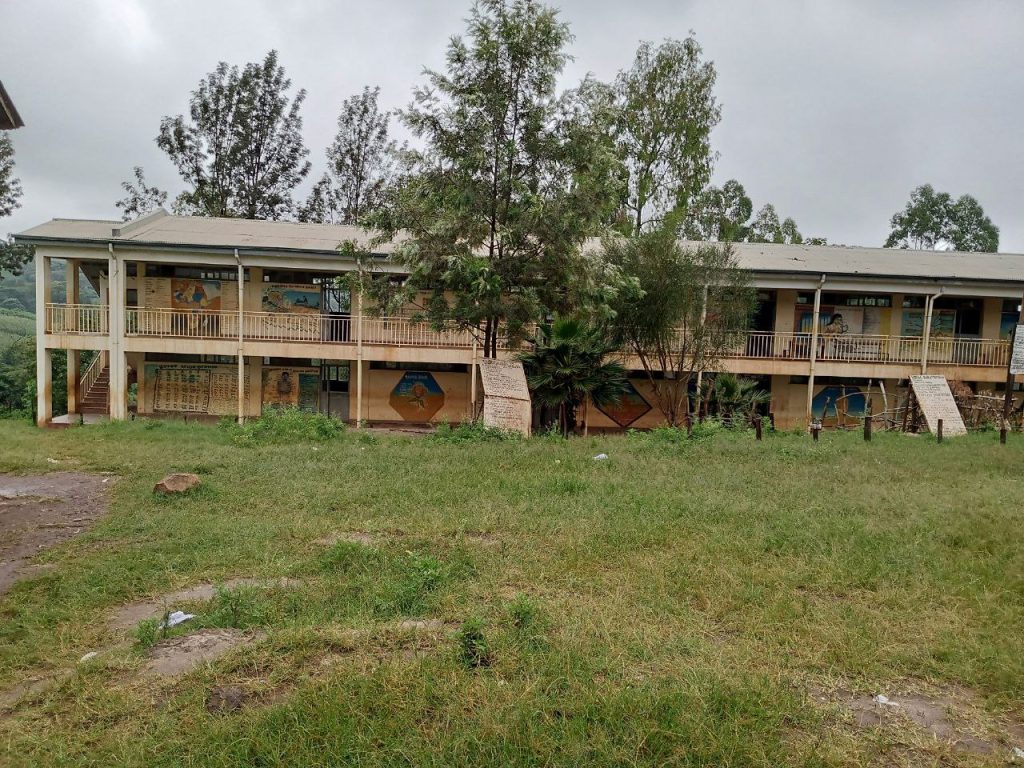
Recognizing the growing educational challenges facing communities in Rejii Kebele and surrounding areas, MIDROC Gold implemented the Rejii G+1 Junior Secondary School Project as part of its Corporate Social Responsibility (CSR) commitment to sustainable community development and educational empowerment.
Located in Rejii Kebele of Oddo Shakiso Woreda, Guji Zone, Oromia Regional State, the school was established to address the critical shortage of learning facilities for students within the area and surrounding kebeles.
Today, the institution stands as an important educational center serving children and families who previously faced limited access to proper classroom facilities and learning environments.
Because when a community lacks schools, the consequences do not end in childhood. The effects echo forward for years through lost opportunities, interrupted education, and generations forced to work harder simply to reach the same starting point as everyone else.
THE NEED FOR EDUCATIONAL INFRASTRUCTURE
Prior to the construction of Rejii G+1 Junior Secondary School, communities within Rejii and neighboring kebeles faced serious shortages of educational infrastructure and classroom space.
The absence of adequate learning facilities created significant pressure on existing schools and limited access to quality education for many students, particularly those living in rural areas.
Parents, elders, and teachers repeatedly expressed concerns regarding overcrowded classrooms, insufficient learning environments, and the growing number of school-age children without access to nearby educational institutions.
The issue became a major community concern and highlighted the urgent need for investment in educational infrastructure within the area.
In response, the project was proposed by Arega Yirdaw as part of MIDROC Gold Mine PLC’s commitment to supporting host communities through sustainable development initiatives focused on education and youth empowerment.
The project was designed not only to build classrooms, but to create opportunities for children and families whose futures depended heavily on access to education.
Humans often describe schools as “facilities.” In reality, they are launch points. Entire futures begin in rooms filled with chalk dust, crowded desks, and exhausted teachers trying to hold civilization together one lesson at a time.
COMMUNITY CONSULTATION AND ENGAGEMENT
Before implementation began, consultations and discussions were conducted with local elders, teachers, and community representatives within Rejii Kebele.
Traditional leaders, including Aba Geda representatives, participated actively in discussions surrounding the project and contributed ideas regarding local educational priorities and community expectations.
Although formal institutional participation from higher government offices was limited during the early consultation process, local kebele leaders provided supervision and coordination support throughout project implementation.
Community participation mainly focused on idea sharing, consultation, and public support for the project. The strong acceptance of the initiative reflected the importance of education within the local community and the urgent need for expanded school infrastructure.
Importantly, the project was implemented without major conflict or resistance, allowing construction activities to proceed smoothly and efficiently.
A rare and beautiful phenomenon in development work: humans agreeing that children should have schools and then not fighting about it for several months.
PROJECT IMPLEMENTATION
The Rejii G+1 Junior Secondary School project was officially proposed in 2005 E.C, with construction activities beginning during the same year.
The implementation process continued through 2007 E.C, when the school infrastructure was completed and prepared for operation.
The project was financed entirely by MIDROC Gold with a total investment of ETB 6,000,000, demonstrating the company’s continued investment in education-focused CSR initiatives within host communities.
Construction was carried out by HUDA Real Estate, which was responsible for delivering the school infrastructure according to the agreed technical specifications and construction standards.
The completed facility included a G+1 building structure equipped with full classroom teaching and learning accessories designed to support quality educational delivery for students from Grade 1 to Grade 8.
PROJECT PROFILE
| Project Information | Details |
| Project Name | Rejii G+1 Junior Secondary School |
| Project Category | Education |
| Location | Rejii Kebele, Oddo Shakiso Woreda |
| Zone | Guji Zone |
| Region | Oromia Regional State |
| Implementing Organization | MIDROC Gold |
| Total Project Budget | ETB 6,000,000 |
| Contractor | HUDA Real Estate |
| Infrastructure Type | G+1 Junior Secondary School |
| Current Status | Active and Operational |
INVESTING IN YOUTH AND LEARNING
The primary objective of the project was to address the shortage of schools and improve access to education for students within Rejii and surrounding kebeles.
The school was specifically designed to serve students from Grade 1 through Grade 8, providing improved classroom environments and expanded educational opportunities for children living in rural communities.
The project aimed to:
- Reduce classroom shortages
- Improve learning environments
- Expand access to primary and junior secondary education
- Support educational continuity for rural students
- Strengthen youth development opportunities
- Promote long-term community advancement through education
For many students, the construction of the school reduced the need to travel long distances in search of education and created safer, more accessible learning opportunities closer to their homes.
COMMUNITY IMPACT
Since becoming operational, Rejii G+1 Junior Secondary School has continued serving students and families across the surrounding communities.
The project has contributed significantly to:
- Expanding educational access within rural areas
- Improving school infrastructure
- Increasing opportunities for youth education
- Supporting local educational development
- Enhancing community confidence in educational services
- Encouraging school attendance among children
In addition to educational benefits, the construction phase also created temporary employment opportunities for contractual workers and daily laborers within the area.
Families that once struggled to find accessible schooling options for their children now benefit from improved educational services within their own community.
The true impact of schools is often invisible at first. It appears years later in teachers, nurses, engineers, technicians, and graduates who once sat in those classrooms wondering whether education could genuinely change their future.
GOVERNMENT COORDINATION AND HANDOVER
During implementation, local kebele leaders participated mainly through supervision and coordination activities.
Following project completion, the school was officially handed over to the Oddo Shakiso Woreda Education Bureau for long-term management and administration.
This handover ensured that the institution would continue operating under the regional educational system while serving future generations of students within the area.
SUSTAINABILITY AND FUTURE EXPANSION
Today, Rejii G+1 Junior Secondary School remains active and operational under the administration of the Oddo Shakiso Woreda Education Bureau.
Plans for future expansion and upgrading are anticipated in response to increasing student enrollment and continued educational demand from surrounding communities.
The project continues to demonstrate the lasting value of educational investment as a foundation for sustainable development and community empowerment.
Unlike many temporary projects that disappear after publicity campaigns fade, schools continue shaping lives quietly every single year. Long after speeches end, classrooms remain full.
A LEGACY OF EDUCATION AND COMMUNITY DEVELOPMENT
Rejii G+1 Junior Secondary School stands today as more than a building complex. It stands as a lasting investment in opportunity, youth empowerment, and social progress.
Through initiatives such as this, MIDROC Gold continues contributing toward educational transformation and sustainable development within its host communities.
For the children and families of Rejii and surrounding kebeles, the school represents something deeply important: the chance to learn, grow, and build a future with greater possibilities than the one before.

No responses yet